I used to treat a sore shoulder as a test of character. If I could still get my arm into position, I told myself I could still train. I would change my grip, warm up a little longer, and carry on as if the discomfort was simply part of getting stronger.
That is how a small ache became something I had to plan around. It showed up when I pressed, when I reached overhead, and sometimes when I tried to get a bar into position for a squat. I did not need another confident person online telling me to push through it. I needed to admit that the movement, load, or range I had chosen was not working.
Stopping every form of training was not the answer either. Pretending nothing had changed definitely was not.
What I had to notice first
Shoulder pain is not one neat thing. It can sit at the front or top of the shoulder, feel deep and vague, or arrive with weakness as the arm comes up. Pressing, push ups, dips, wide grip pulling, and the position of a straight bar on the back can all ask different things of the joint.
I could not diagnose my own shoulder from a gym floor. What I could do was pay attention to the pattern. A sharp sudden pain, an audible pop, visible change, new weakness, numbness or tingling, night pain, or a loss of motion that did not improve were not signals to work around by myself. They were reasons to get assessed.
For the ordinary irritation that settled between sessions, I started asking a simpler question. Can I find a version of this training that does not make the shoulder worse?
I stopped forcing the same lifts
My old mistake was thinking that changing the exercise meant losing progress. In practice, a substitute often let me keep the purpose of the session without repeating the position that was irritating me.
These were the changes that made more sense than proving I could tolerate a painful rep:
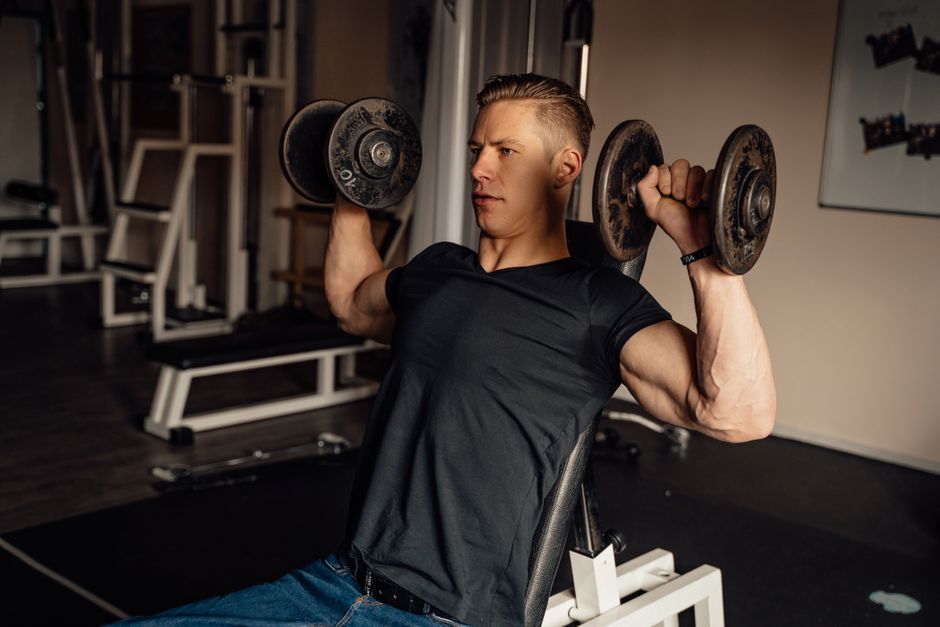
- I used a single dumbbell or kettlebell when a barbell press felt fixed and uncomfortable.
- I tried an angled press when direct overhead work was not agreeing with me.
- I shortened the bottom range of pressing with a floor press when the shoulder objected there.
- I used dumbbells with a neutral grip when that gave the shoulder room to find a better position.
- I chose push ups when the free movement of the shoulder blades felt better than being pinned against a bench.
- I changed the squat variation when holding a straight bar on my back was the problem.
A substitution is not a magic fix. It is a way to keep training effect while I work out what the shoulder will tolerate. If the modified movement still produced pain, I stopped trying to win an argument with it and picked something else.
Technique and volume were part of the problem
I had spent plenty of time blaming a single exercise. The sources I read kept bringing me back to the way a lift was performed and how much pressing I was asking the shoulder to absorb.
During bench pressing, letting the elbows drift far behind the body and allowing the shoulder blades to roll forward can make the bottom position feel crowded. The useful cue was to keep the shoulder blades back and down, row the bar down with control, and meet it with the chest instead of letting it fall. On push ups, actively drawing the ground toward the chest gave me something to focus on besides just getting the rep done.
I also had to look at my training balance. Pressing had been easy to count and easy to chase. Rows and other pulling work were the things I rushed or skipped. Increasing pulling work relative to pressing was a practical change, not a punishment. It gave my upper back more of a role in the programme.
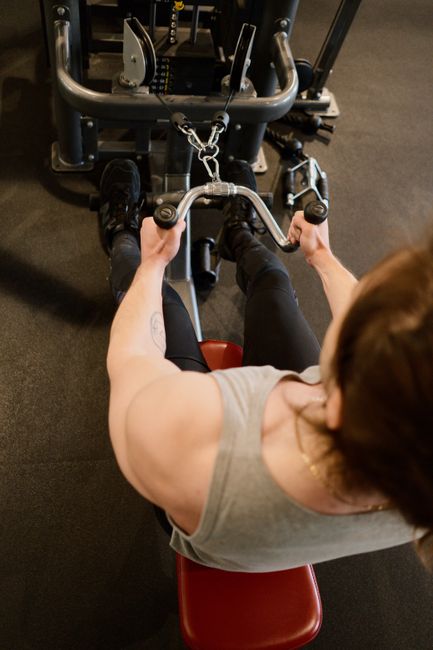
There was no reason to make the warm up theatrical. I used a few movements that prepared the shoulder and upper back for the session, then lighter sets to rehearse the lift. The point was to arrive at the first working set warmer and more aware, not tired from a ritual.
What I do when the shoulder speaks up
I am not a clinician, and I no longer pretend that a few drills give me the authority to explain every painful shoulder. My job is to train honestly around what I feel and get professional help when the pattern calls for it.
For now, that means reducing the pressing that flares it up, keeping the rest of my training moving where it is comfortable, and building back only when the shoulder has given me a reason to trust the next step. I still like training hard. I just do not confuse stubbornness with discipline anymore.